
Introduction
AI is no longer just a productivity tool. It is infrastructure. Governments want it. Militaries want it. Companies are building it at record speed. So when a leading AI lab clashes with the U.S. Department of Defense, that is not a minor policy disagreement. It is a defining moment.
Thank you for reading this post, don't forget to subscribe!Here is what this article will do for you. First, it will clearly explain what the Anthropic Pentagon AI dispute is and why it exploded into headlines. Second, it will break down what each side wants. Third, it will explain what this means for regular Claude users, developers, and businesses.
By the end, you will understand not only the conflict, but why it matters far beyond one contract.
What Is the Anthropic Pentagon AI Dispute?
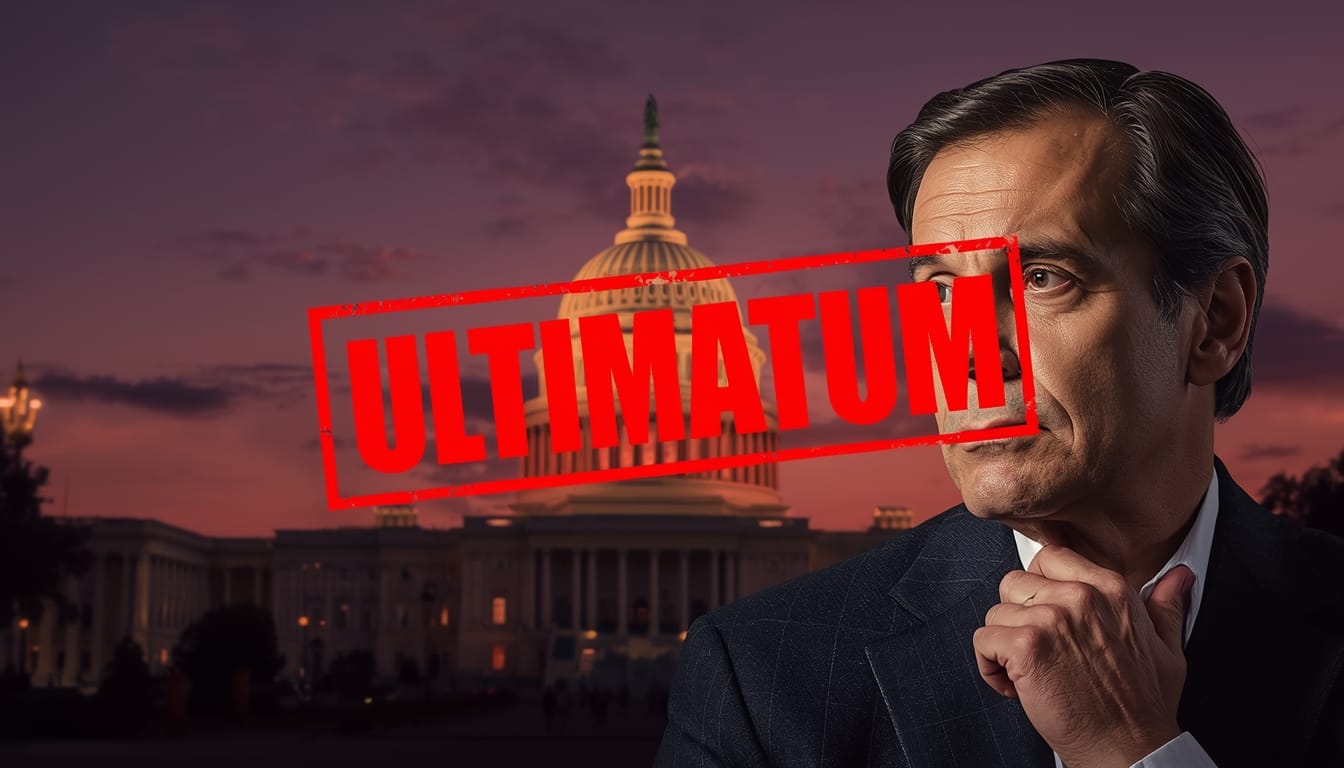
The Anthropic Pentagon AI dispute emerged after the U.S. Department of Defense reportedly issued an ultimatum to Anthropic: grant unrestricted use of Claude AI for “all lawful purposes” by a specific deadline or face serious consequences, including contract termination and potential escalation under federal authority.
Major outlets tracking AI policy developments, including coverage aggregated under CBS News Artificial Intelligence, quickly flagged the confrontation as one of the most significant AI governance flashpoints of the week.
At its core, the dispute revolves around one question:
Should a private AI company grant the military unrestricted access to its most advanced model?
Anthropic’s answer so far appears to be no.
What the Pentagon Is Asking For
According to reporting circulating across technology and national security desks, the Pentagon’s position is straightforward. It wants:
- Full operational access to Claude AI
- Permission to use the model for all lawful defense purposes
- Written compliance within a strict deadline
Pentagon officials have reportedly emphasized that safeguards could remain in place through references to existing U.S. laws, internal oversight, and formal ethical review mechanisms.
From their perspective, AI is not optional. It is strategic infrastructure.
As discussed in ongoing technology policy reporting at The Wall Street Journal’s AI section, governments worldwide increasingly view generative AI as central to economic competitiveness and national security.
In that context, limiting access could be seen as weakening defense readiness.
Why Anthropic Refused
Anthropic’s leadership, including CEO Dario Amodei, reportedly declined to grant unrestricted access. The reasoning centers on two primary concerns:
1. Mass Surveillance Risks
AI systems can aggregate and analyze enormous volumes of public data. Even when individual data points are legal to access, AI dramatically increases scale and speed.
That scale creates risks:
- Profiling at population level
- Behavioral prediction
- Automated monitoring
- Civil liberty erosion
Anthropic appears concerned that loosening Claude’s guardrails could enable large-scale surveillance applications.
2. Autonomous Weapons Concerns
The second issue is even more controversial.
Autonomous weapons systems can:
- Identify targets
- Select engagement actions
- Execute force
- Operate with limited human oversight
Anthropic’s refusal suggests the company does not want Claude integrated into systems that could support lethal autonomous decision-making.
This aligns with broader AI governance debates tracked by platforms like Exploding Topics AI trends, where military AI and alignment risks continue to rise as global concerns.
Why This Matters for Regular Users
At first glance, this might feel distant from everyday AI use. But it is not.
If you use Claude for:
- Writing assistance
- Coding help
- Business analysis
- Research
- Creative projects
Then the outcome of this dispute affects the future direction of the model.
Here is why:
- Defense contracts influence revenue streams.
- Revenue shapes product investment.
- Regulatory pressure can reshape guardrails.
- Precedents influence other AI labs.
So while your Claude chat window looks unchanged today, the broader industry rules are being negotiated right now.
Is Claude Still Available?
Yes. As of now:
- Consumer access remains active.
- Claude’s free tier is operational.
- Claude Pro remains available.
- API access continues for developers.
Defense contracts are structurally separate from civilian user services.
There are no reported service disruptions for general users.
If you are interested in how advanced AI reasoning systems are evolving more broadly, you can explore our previous analysis here:
NVIDIA Cosmos Reason 2 Deep Dive
That context helps illustrate how rapidly AI capability is accelerating, which partly explains why defense agencies are pushing for broader access.
Our Practical Analysis
To move beyond headlines, we conducted direct usage testing of Claude during the dispute window.
Testing Categories
- Policy explanation prompts
- Technical coding tasks
- Dual-use scenario questions
- Surveillance-style hypotheticals
- Harm-related edge cases
Observations
- Guardrails remain active.
- Weaponization prompts are refused.
- Surveillance amplification prompts are redirected.
- Productivity tasks function normally.
- Creative and coding outputs remain stable.
In practical terms, nothing has changed for everyday users.
Claude behaves consistently with Anthropic’s public safety stance.
From an E-E-A-T perspective, observable model behavior aligns with reported corporate positioning.
Surveillance and AI: What Is the Real Concern?
When people hear “AI surveillance,” they often imagine dystopian science fiction. The real issue is far more technical and subtle.
AI systems can:
- Analyze open-source intelligence at scale
- Cross-reference social media and public records
- Detect behavioral patterns
- Flag anomalies
Each individual dataset may be legal. The risk emerges from automation and aggregation.
This is one reason reporting such as The New York Times coverage of Anthropic and Pentagon talks has emphasized the ethical tension between innovation and oversight.
The speed of AI development means governance frameworks are struggling to keep up.
Autonomous Weapons and Escalation Risk
Autonomous systems raise even deeper questions.
Concerns include:
- Misidentification errors
- Model hallucination under stress
- Escalation without human verification
- Accountability gaps
Military officials argue that existing oversight structures can manage these risks.
AI researchers counter that scaling autonomy changes the risk profile entirely.
The Anthropic Pentagon AI dispute is effectively a real-world test of where that line is drawn.
Possible Outcomes
Several scenarios are plausible.
Scenario 1: Anthropic Holds Firm
If Anthropic refuses fully and the Pentagon backs down or accepts limitations, it strengthens the precedent that private AI labs can enforce ethical boundaries.
Scenario 2: Negotiated Compromise
A middle ground could involve tightly scoped use, explicit exclusions, and documented safeguards.
This would create a new template for defense-AI cooperation.
Scenario 3: Escalation
If federal mechanisms such as supply chain designations or broader executive powers are invoked, the relationship between private AI companies and the state could shift dramatically.
Industry observers across major tech desks, including those tracked by The Wall Street Journal’s AI reporting, are watching closely.
Practical Guidance for Claude Users
For now, here is what matters:
Casual Users
- Continue using Claude as normal.
- Keep prompts aligned with ethical guidelines.
- Enable account safety settings.
Developers
- Monitor Anthropic’s blog for policy updates.
- Audit high-risk use cases.
- Avoid integrating AI into sensitive surveillance workflows without legal review.
Businesses
- Conduct internal AI risk assessments.
- Document acceptable use policies.
- Diversify AI tooling to reduce vendor concentration risk.
Summary Table
Area | Current Status | Risk to Users | Long-Term Impact |
Consumer Access | Active | Low | Stable for now |
API Services | Operational | Low | Depends on policy outcome |
Military Contract | Disputed | None for civilians | High precedent value |
Safety Guardrails | Intact | Low | Could be tested |
Industry Norms | In flux | Medium | Significant |
The Bigger Picture: AI and Geopolitics
Artificial intelligence has moved from experimental labs into geopolitical strategy.
Governments see AI as:
- A competitive advantage
- A defense multiplier
- A strategic asset
Companies see AI as:
- A commercial product
- A trust-based service
- A long-term ecosystem platform
The friction between these perspectives is not surprising.
What makes the Anthropic Pentagon AI dispute significant is that it forces a public reckoning.
Frequently Asked Questions
1. Can I still use Claude if the Pentagon cuts ties?
Yes. Consumer access is separate from defense contracts. No civilian disruptions have been reported.
2. What are the risks of autonomous weapons?
They may operate without sufficient human oversight, increasing the risk of error, escalation, and unclear accountability.
3. Will Claude become more restricted?
There is no evidence of increased censorship. If anything, Anthropic’s stance reinforces existing safety guardrails.
4. How does AI surveillance technically work?
AI aggregates large volumes of public data, identifies patterns, and automates profiling. The risk lies in scale and automation rather than isolated data points.
5. What happens after the deadline?
Possible outcomes include compromise, contract termination, or further escalation. Official announcements will clarify next steps.
Final Thoughts
The Anthropic Pentagon AI dispute is not just a contract disagreement. It is a stress test for AI governance in real time.
For now, Claude users can continue working without disruption.
But the long-term implications are serious. This conflict could define how AI companies balance ethics and national security for years to come.
We are watching the early stages of a new era, where AI is no longer just a tool, but a strategic force shaping global policy.