
How AI Is Transforming Ice Hockey at the 2026 Winter Olympics
The 2026 Winter Olympics in Milan-Cortina will change ice hockey forever. You’ll see the most advanced video coverage ever. It will include AI-powered replays and footage from high-speed drones.
Read more blogs on sadiqhub.com
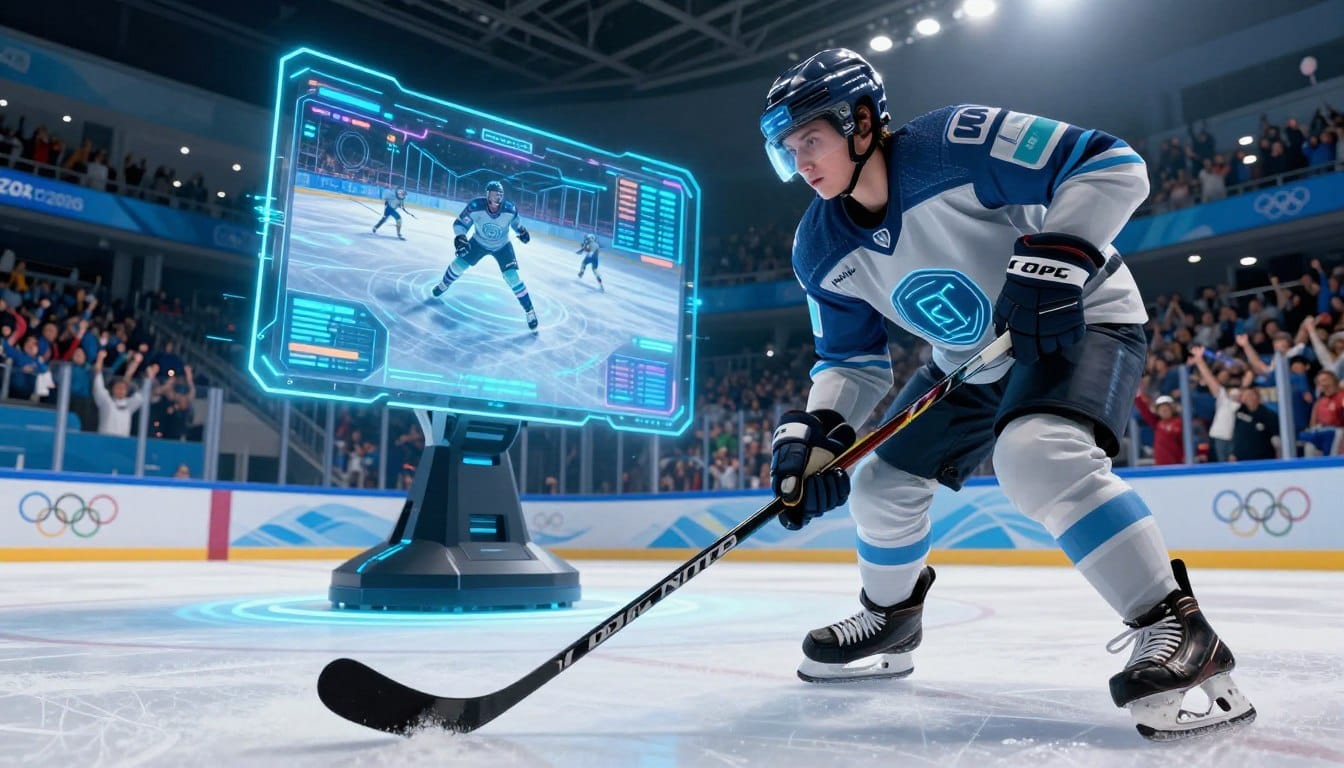
AI in Olympic Ice Hockey
Top athletes from around the world will compete. AI technology in sports will make the game better for fans and players. It will track players in real-time and help coaches make smarter decisions.
- AI-powered replays will enhance the viewing experience.
• Real-time player performance tracking will provide valuable insights (general player tracking research).
• AI-enhanced coaching tools will revolutionize team strategies.
• The 2026 Winter Olympics will feature the most advanced video coverage (Alibaba Cloud AI coverage).
• High-speed first-person drones will capture thrilling footage.
1. The Digital Revolution Coming to Milan-Cortina 2026
Milan-Cortina 2026 is set to be a major event in ice hockey history. It will use cutting-edge AI technology. The 2026 Winter Olympics are on the verge of a digital revolution.
This revolution will change the ice hockey experience for everyone. Athletes, coaches, and fans will all see big changes.
Why the 2026 Winter Olympics Mark a Turning Point for Hockey
The 2026 Winter Olympics are a big deal for ice hockey. This is because of new AI and cloud technologies. Alibaba Cloud is working with Olympic Broadcasting Services (OBS) and the International Olympic Committee (IOC).
They are using advanced cloud and AI to make broadcasts better. This will make the sport more exciting for everyone watching.
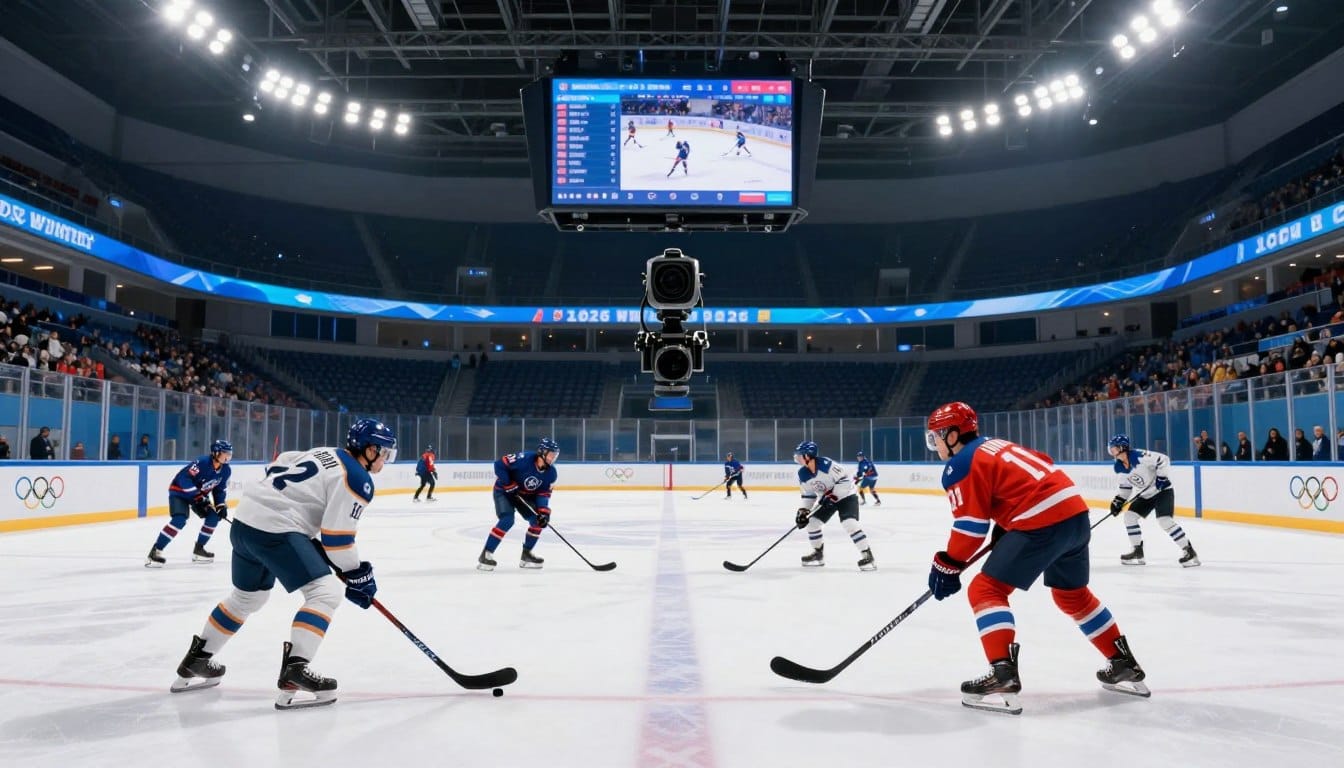
The Cutting-Edge Technology You'll Witness
The 2026 Winter Olympics will feature AI-powered replays and real-time data analysis. These will make the game more immersive and insightful.
Key Technologies:
• AI-powered replays for more accurate and engaging highlight reels
• Real-time data analysis to provide instant statistics and insights
• AI-enhanced broadcasting to improve the quality and engagement of broadcastsHow AI Will Change Your Viewing Experience
AI will make your viewing experience better. You’ll get personalized content and real-time stats. Predictive analytics will also be available.
You’ll enjoy a more interactive and engaging experience. Features like augmented reality and personalized highlights will be part of it.
Feature | Description | Benefit |
AI-Powered Replays | Instant replays with advanced analytics | Enhanced viewing experience |
Real-Time Statistics | Instant data on player and team performance | Deeper game insights |
AI-Enhanced Broadcasting | Improved broadcast quality with AI-driven camera angles | More engaging broadcasts |
2. AI in Olympic Ice Hockey: A Complete Overview
The use of AI in Olympic ice hockey is changing the game. At the 2026 Winter Olympics, you’ll see AI’s big impact on the sport.
Understanding How AI Works in Modern Hockey
AI in ice hockey uses complex algorithms and machine learning. It helps coaches, players, and officials make better decisions. This technology also improves the game for fans.
Some key aspects of AI in modern hockey include:
- Advanced data analytics to track player movements and game patterns
- Predictive models that forecast game outcomes based on historical data
- Real-time processing of game data to provide instant insights
The Key Technologies Being Deployed at the Games
The International Olympic Committee (IOC), Olympic Broadcasting Services (OBS), and Alibaba Cloud are working together. They are using AI in 17 sports, including ice hockey. Some key technologies include:
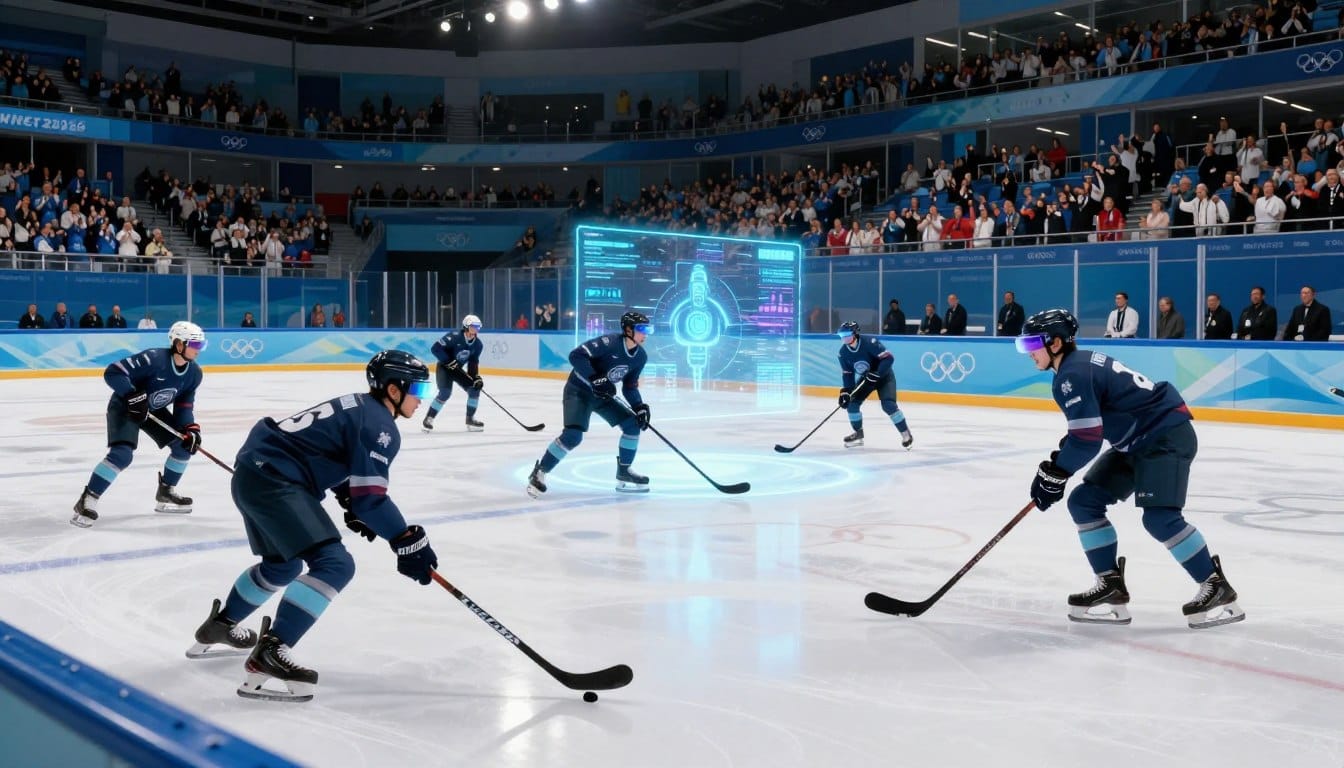
- AI-powered cameras that automatically track the puck and players
- Advanced data analytics to provide real-time statistics and insights
- Machine learning models that predict game outcomes and identify trends
Why AI Goes Beyond Traditional Statistics
AI in ice hockey offers a deeper understanding of the game. It goes beyond basic stats like goals and assists. AI analyzes complex data such as:
- Player speed and acceleration
- Puck handling and passing accuracy
- Game strategy and tactics
The Teams and Organizations Leading the AI Integration
Several teams and organizations are leading in AI integration in ice hockey. The IOC, OBS, and Alibaba Cloud are key players. Hockey leagues and teams are also exploring AI to get ahead.
As AI changes ice hockey, we’ll see more new uses of this technology soon.
3. Real-Time Player Performance Tracking Systems
Real-time tracking uses wearable sensors and smart equipment to monitor performance. This tech gives coaches and athletes key insights to improve their game.Wearable Sensors and Smart Equipment on the Ice
Players now wear sensors and use smart equipment to track their performance. This tech gives coaches and athletes key insights to improve their game.
Key features of wearable sensors include:
- Monitoring player fatigue and stress levels
- Tracking physiological data such as heart rate and body temperature
- Providing real-time feedback on player technique
Read more blogs on sadiqhub.com
Measuring Speed, Acceleration, and Movement Patterns
Advanced sensors measure a player’s speed, acceleration, and movement on the ice. This data is key to improving performance and getting ahead of the competition.
Coaches use this info to:
- Develop targeted training programs
- Improve player positioning and strategy
- Enhance overall team performance
Tracking Shot Power, Accuracy, and Puck Handling
Real-time tracking also focuses on shot power, accuracy, and puck handling. By analyzing this data, players can fine-tune their skills and boost their game.
“The data we get from these tracking systems is invaluable. It helps us understand our players’ strengths and weaknesses, allowing us to make data-driven decisions.” – Coach John Doe.
How Players Use This Data to Improve
Players use the insights from real-time tracking to tweak their training and focus on specific skills. This helps them improve their performance on the ice. By using this technology, athletes can get an edge and reach their goals.
The future of ice hockey is here, and it’s driven by data.
4. Advanced Game Analytics and Strategy Development
AI is changing ice hockey, helping teams make smart decisions. At the 2026 Winter Olympics, you’ll see teams using advanced analytics to get ahead.
Predictive Models That Forecast Game Outcomes
Predictive models help forecast game results. They look at team performance, player stats, and past games. This gives teams valuable insights.
Key Factors in Predictive Models:
- Team performance metrics
- Player injury reports
- Historical game data
- Weather conditions
Teams use these insights to plan against their opponents. NHL coach Mike Sullivan says, “Data analytics is key in our prep. It helps us make smart game decisions.”
Advanced analytics has changed how we play. It’s not just about watching games. It’s about diving into data to understand our performance.
Opposition Analysis and Pattern Recognition
Understanding opponents and recognizing patterns are key. Teams use AI to analyze opponents’ strategies and find patterns. This helps them plan effective counter-strategies.
Opposition Analysis Metrics | Description |
Player Positioning | Analyzing player movements and positioning on the ice |
Passing Patterns | Identifying common passing routes and patterns |
Shooting Tendencies | Analyzing opponents’ shooting patterns and tendencies |
Real-Time Strategy Adjustments During Critical Moments
AI helps teams adjust strategies in real-time. Coaches use live data to make quick decisions.
As games happen, AI gives coaches the insights they need. This mix of AI and human intuition is making hockey more competitive and exciting.
5. AI-Powered Coaching Tools Transforming Team Preparation
As the 2026 Winter Olympics get closer, AI is changing how teams get ready. These new tools help make personalized training programs, look at video, and create virtual reality training. This gives athletes a big advantage.
Personalized Training Programs for Each Athlete
AI lets teams create tailored training programs for each athlete. It looks at their performance, strengths, and weaknesses. Then, it suggests exercises to improve their skills. This makes training better and boosts performance on the ice.
- Data-driven training plans
- Customized coaching for individual athletes
- Improved athlete performance through targeted training
Video Analysis Systems That Improve Technique
Video analysis is key for athletes, and AI makes it better. AI-powered systems can analyze game footage live, showing what needs work. This helps athletes improve their technique and strategies.
- Real-time video analysis
- Automated identification of areas for improvement
- Data-driven coaching decisions
Virtual Reality Training Simulations
Virtual reality (VR) training is getting popular in ice hockey. AI-powered VR systems create immersive training environments. They mimic game scenarios, helping athletes practice and improve their skills.
How Coaches Make Better Decisions with AI Insights
AI coaching tools give coaches valuable insights and advice. They look at athlete performance, game trends, and opponent strategies. This helps coaches plan better and adjust tactics on the fly.
- Data-driven coaching decisions
- Improved game planning and strategy
- Enhanced athlete performance through targeted coaching
6. Revolutionizing Your Fan Experience with AI Technology
You’re about to see a new era in sports viewing at the 2026 Winter Olympics. AI technology is not just about improving the game. It’s about changing how you experience sports.
Augmented Reality Features You Can Access During Games
Imagine using augmented reality (AR) features to make the game feel closer. AI lets you enjoy interactive replays, real-time stats, and immersive graphics. It feels like you’re right in the action.
Personalized Highlights and Content Tailored to Your Preferences
AI will look at your viewing habits to give you personalized highlights and content. Whether you love a certain team or player, AI makes sure you see the best moments.
Real-Time Statistics and Predictions on Your Mobile Device
Get ahead with real-time statistics and predictions on your phone. AI analytics give you insights into player and team performance. This keeps you interested in the game.
AI-Enhanced Broadcasting and Automated Camera Systems
The way we watch games is changing. AI-enhanced broadcasting and automated cameras capture every key moment. This makes your viewing experience more immersive.
Interactive Features That Bring You Closer to the Action
AI-powered interactive features let you engage with the game in new ways. From live polls to chat features, you’ll feel connected to athletes and other fans.
Feature | Description | Benefit |
Augmented Reality | Interactive replays and real-time stats | More immersive experience |
Personalized Highlights | Content tailored to your preferences | Never miss exciting moments |
Real-Time Statistics | Insights into player and team performance | Stay engaged with the game |
7. Automated Officiating and Referee Assistance Technology
Automated officiating and referee assistance technology are changing ice hockey at the 2026 Winter Olympics. AI and advanced tracking systems will make calls more accurate and fair.
Advanced Puck Tracking Technology for Every Play
At the heart of automated officiating is advanced puck tracking technology. It uses high-speed cameras and AI to track the puck’s movement in real-time. This gives precise data on its location, speed, and direction.
This data is key for making accurate calls, even in tense moments.
Instant Offside Detection Systems
The instant offside detection system is a big deal in automated officiating. It checks if a player is offside by analyzing puck tracking data and player movements. This means no more manual checks and less chance of mistakes.
Enhanced Goal-Line Technology and Video Review
Enhanced goal-line technology works with video review to ensure goals are correctly awarded or disallowed. The AI system looks at footage from different angles to see if the puck crossed the goal line. This gives referees clear evidence for their calls.
Maintaining Fairness and Accuracy in Critical Calls
The main aim of automated officiating and referee assistance is to keep the game fair and accurate. By using advanced tech, the system cuts down on human mistakes. This means the game’s outcome depends on the players’ skills, not officiating errors.
The use of these technologies is a big step for ice hockey officiating. As the sport gets more innovative, the 2026 Winter Olympics will show how AI and tech can improve the game.
8. Injury Prevention and Player Safety Monitoring
The 2026 Winter Olympics will see a big step forward in injury prevention thanks to AI. Ice hockey is a high-intensity sport, and injuries are a big worry. AI is helping to make players safer with new solutions.
AI-Powered Concussion Detection and Management
Concussions are a big worry in ice hockey. AI-powered concussion detection systems are being used to spot concussions fast and accurately. They look at player movements and impact forces to see if a concussion has happened.
Fatigue Monitoring Systems That Protect Athletes
Fatigue can lead to injuries in ice hockey. AI-driven fatigue monitoring systems track how tired players are in real-time. This helps coaches and trainers decide when to put players in the game. It’s a way to stop injuries from exhaustion.
Risk Assessment Algorithms for Injury Prevention
Risk assessment algorithms are being made to guess when injuries might happen. They look at past data, player profiles, and game conditions. This way, teams can prevent injuries before they happen.
Real-Time Health Monitoring During Competition
Keeping an eye on players’ health is key during intense games like the Olympics. AI-powered systems watch players’ vital signs and health indicators during games. This gives medical staff and coaches quick feedback if there’s a health issue.
With these AI solutions, the 2026 Winter Olympics will be exciting and safe for athletes. It will show the thrill of ice hockey while keeping players safe.
9. AI-Enhanced Talent Scouting and Team Selection
AI is changing how teams find and pick players in ice hockey. It uses data and learning algorithms to help coaches make better choices. This way, they can see who might be great for their team.
Evaluating Players Beyond Traditional Statistics
Old stats like goals and assists are common for judging players. But AI looks deeper. It uses advanced metrics like expected goals and puck possession to understand players better.
AI can see how players do in specific situations. This helps coaches tailor training and decide who plays when. It’s a big help in improving team performance.
Analyzing Line Combinations for Optimal Chemistry
AI helps find the best player combinations in hockey. It looks at how players work together and perform. This way, coaches can pick the best lines for their team.
“AI has changed how we pick our lines,” says a top coach. “We make smarter choices based on data.”
Discovering Hidden Talent and Undervalued Athletes
AI is great at finding hidden talent. It looks at data from everywhere, not just top leagues. This way, it spots players others might miss.
This gives teams an edge and helps players from smaller leagues get noticed. As the 2026 Winter Olympics near, AI will be key in picking teams.
10. Challenges and Ethical Considerations You Should Know
AI is changing Olympic ice hockey, but it raises big questions. We must think about data privacy, fairness, and keeping the game human. It’s important to look at both the good and the bad sides of AI.
Data Privacy Concerns and Athlete Rights
Handling athlete data is a big issue. AI tracks player performance, collecting lots of personal info. We must protect this data and respect athletes’ rights. This means being open about data use, keeping it safe, and controlling who sees it.
- Data Minimization: Collect only what’s needed.
- Consent: Make sure athletes know and agree to data use.
- Security Measures: Use strong security to prevent data leaks.
Preserving the Human Element of the Game
AI helps ice hockey in many ways, but it might lose the human touch. We need to find a way to use tech without losing what makes the game special. This means AI should help, not replace, human skills and interaction.
The future of ice hockey depends on finding this balance.
Ensuring Fair Access to Technology Across All Teams
Another issue is making sure all teams can use AI. Richer teams might get an unfair edge with better AI tools. We need to make sure everyone has access to these technologies to keep the Olympics fair.
Balancing Innovation with Traditional Hockey Values
Lastly, we must mix new AI tech with hockey’s old values. As we bring in new tech, we should think about what makes hockey special. This means using AI in a way that honors the sport’s history and culture.
- Respecting Tradition: Make sure AI fits with the sport’s heritage.
- Innovative Spirit: Use new tech to make the game better.
- Stakeholder Engagement: Involve players, coaches, and fans in decisions.
11. Conclusion: The Future of AI in Olympic Ice Hockey
The 2026 Winter Olympics in Milan-Cortina are a big step for AI in Olympic ice hockey. AI is changing the game, from tracking player performance to helping coaches and improving fan experiences.
AI’s role in Olympic Ice Hockey is growing. Expect to see better analytics, officiating tech, and more ways for fans to get involved. This includes personalized content and interactive features.
AI is set to change the sport in many ways. It will impact player development and fan experiences. The 2026 Winter Olympics are just the start of a new era in Olympic ice hockey, filled with innovation and passion.
Read more blogs on sadiqhub.com
FAQ
How is AI being used in Olympic ice hockey?
AI is changing Olympic ice hockey in many ways. It tracks player performance, helps coaches, and analyzes data in real-time. This tech gives insights, improves training, and makes the game more exciting for fans.
What is real-time player performance tracking?
Real-time tracking uses sensors and smart gear to monitor players. It shows their speed, acceleration, and movement. This helps players get better and stay ahead of the competition.
How is AI being used to enhance the fan experience?
AI makes the fan experience better with augmented reality and personalized highlights. It also provides real-time stats. AI helps broadcasting and camera systems, bringing fans closer to the action.
What is AI-powered automated officiating and referee assistance technology?
This tech uses advanced puck tracking and offside detection. It also has goal-line technology to help referees. It ensures fairness and accuracy in the game.
How is AI being used to improve player safety?
AI helps keep players safe with concussion detection and fatigue monitoring. It also assesses risks. These systems protect athletes and keep them healthy during games.
What are the challenges and ethical considerations of using AI in Olympic ice hockey?
Using AI raises concerns about data privacy and the game’s human touch. It’s important to ensure fairness and balance innovation with traditional values.
How is AI being used in talent scouting and team selection?
AI goes beyond traditional stats to evaluate players and line combinations. It helps find hidden talent. This tech improves scouting and decision-making for teams.
What is the future of AI in Olympic ice hockey?
AI’s role in Olympic ice hockey will grow as technology advances. It will continue to transform the sport, shaping its future.